Password security is an often underestimated but critical topic in software development. Databases containing millions of user logins are repeatedly compromised - and shockingly, often, it turns out that passwords have been stored in plain text. This gives attackers direct access to sensitive account data and opens the door to identity theft, account takeovers and other attacks.
A URL shortener seems harmless – but if implemented incorrectly, it opens the door to phishing, enumeration, and data leakage. In this first part, I’ll explore the theoretical and security-relevant fundamentals of a URL shortener in Java – without any frameworks, but with a focus on entropy, collision tolerance, rate limiting, validity logic, and digital responsibility. The second part covers the complete implementation: modular, transparent, and as secure as possible.
Vaadin Flow is a robust framework for building modern web applications in Java, where all UI logic is implemented on the server side. In this blog post, we’ll make a simple file management application step by step that allows users to upload files, save them to the server, and download them again when needed. This is a great way to demonstrate how to build protection against CWE-22, CWE-377, and CWE-778 step by step.
1. Getting started – trust in everyday internet life # Anyone who enters a web address like “www.example.de” into the browser expects a familiar website to appear within seconds. Whether in the home office, at the university, or in the data center, access to online services is now a given. The underlying technical processes are invisible to most users; even in IT practice, they are often taken for granted. One of these invisible processes is name resolution by the Domain Name System (DNS).
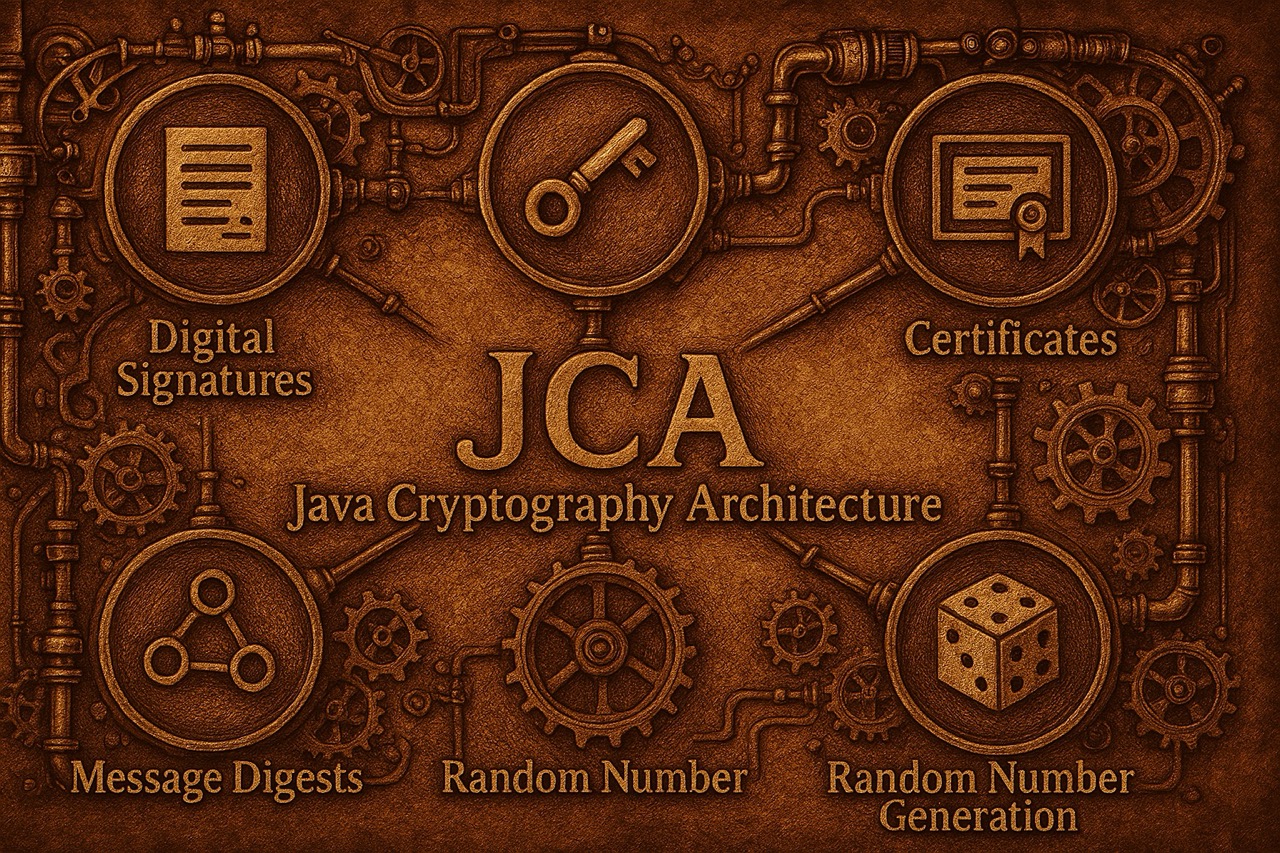
The Java Cryptography Architecture (JCA) is an essential framework within the Java platform that provides developers with a flexible and extensible interface for cryptographic operations. It is a central component of the Java Security API and enables platform-independent implementation of security-critical functions.