The world of cybersecurity is full of threats, many of which are surprisingly subtle and challenging to detect. One such threat is the problem of so-called homoglyphs. CWE-1007, also known as “Insufficient Visual Distinction of Homoglyphs Presented to User”, is a vulnerability often used by attackers to deceive and compromise your systems or data. In this blog article, you will get a deep insight into CWE-1007, understand its mechanisms, and how to protect yourself from such attacks. We will discuss examples, technical challenges, and best practices that can help you as a developer understand and mitigate this threat.
Since the early days of computer science, parallel processing has represented one of the greatest challenges and opportunities. Since its inception in 1995, Java has undergone a significant journey in the world of parallel programming to provide developers with ever-better tools. This story is a fascinating journey through threads, the executor framework, fork/join, parallel streams, CompletableFuture and the latest developments in Project Loom. In this blog post, we take a detailed look at the evolution of parallel processing in Java and the innovations that came with it.
Learn how inadequate control over error reporting leads to security vulnerabilities and how to prevent them in Java applications. # Safely handling error reports is a central aspect of software development, especially in safety-critical applications. CWE-778 describes a vulnerability caused by inadequate control over error reports. This post will analyse the risks associated with CWE-778 and show how developers can implement safe error-handling practices to avoid such vulnerabilities in Java programs.
Unit testing is an essential software development concept that improves code quality by ensuring that individual units or components of a software function correctly. Unit testing is crucial in Java, one of the most commonly used programming languages. This article will discuss what unit testing is, how it has evolved, and what tools and best practices have been established over the years.
What is a dependency management tool? # A dependency management tool is a software system or utility that automates the process of identifying, retrieving, updating, and maintaining the external libraries or packages (referred to as dependencies) required by a software project. It ensures that all necessary dependencies are included and managed in a standardised way, which helps prevent version conflicts, missing libraries, and manual errors during software development.
Tapestry, Wicket, and Vaadin # A component-oriented Java web application framework is a development framework that enables the construction of web applications in a modular way, using reusable, encapsulated components that manage their state, behaviour, and presentation. This approach allows developers to build complex user interfaces by assembling pre-built or custom components, like building blocks, each handling specific functionalities within the application.
Self-modifying code refers to a type of code that alters its own instructions while it is executing. While this practice can offer certain advantages, such as optimisation and adaptability, it is generally discouraged due to the significant risks and challenges it introduces. For Java developers, using self-modifying code is particularly problematic because it undermines the codebase’s predictability, readability, and maintainability, and Java as a language does not natively support self-modification of its code.
Introduction # TinkerForge is an innovative and modular hardware system that allows users to build electronic devices quickly and flexibly. Whether you’re an experienced engineer, a hobbyist, or a complete newbie, TinkerForge offers a range of components that can be easily connected and programmed, allowing for rapid prototyping and the creation of custom electronics projects. Since its launch, TinkerForge has gained popularity in various areas, including education, research, and industrial automation, due to its user-friendly design and extensive feature set.
In this part of the series about Vaadin Flow, I will show how I can create the basic framework for the graphic design of a work application. The focus here is on the design of the work area and the organisation of the individual logical application groups. In other words, we create the application layout that can be used for an industrial project.
We will now create a new Vaadin Flow application step by step and create a basic framework for our own projects with this component-based open-source web framework. So, right from the start, the question arises: How can you start with as little effort as possible without avoiding the usual expenses that sometimes come with creating projects?
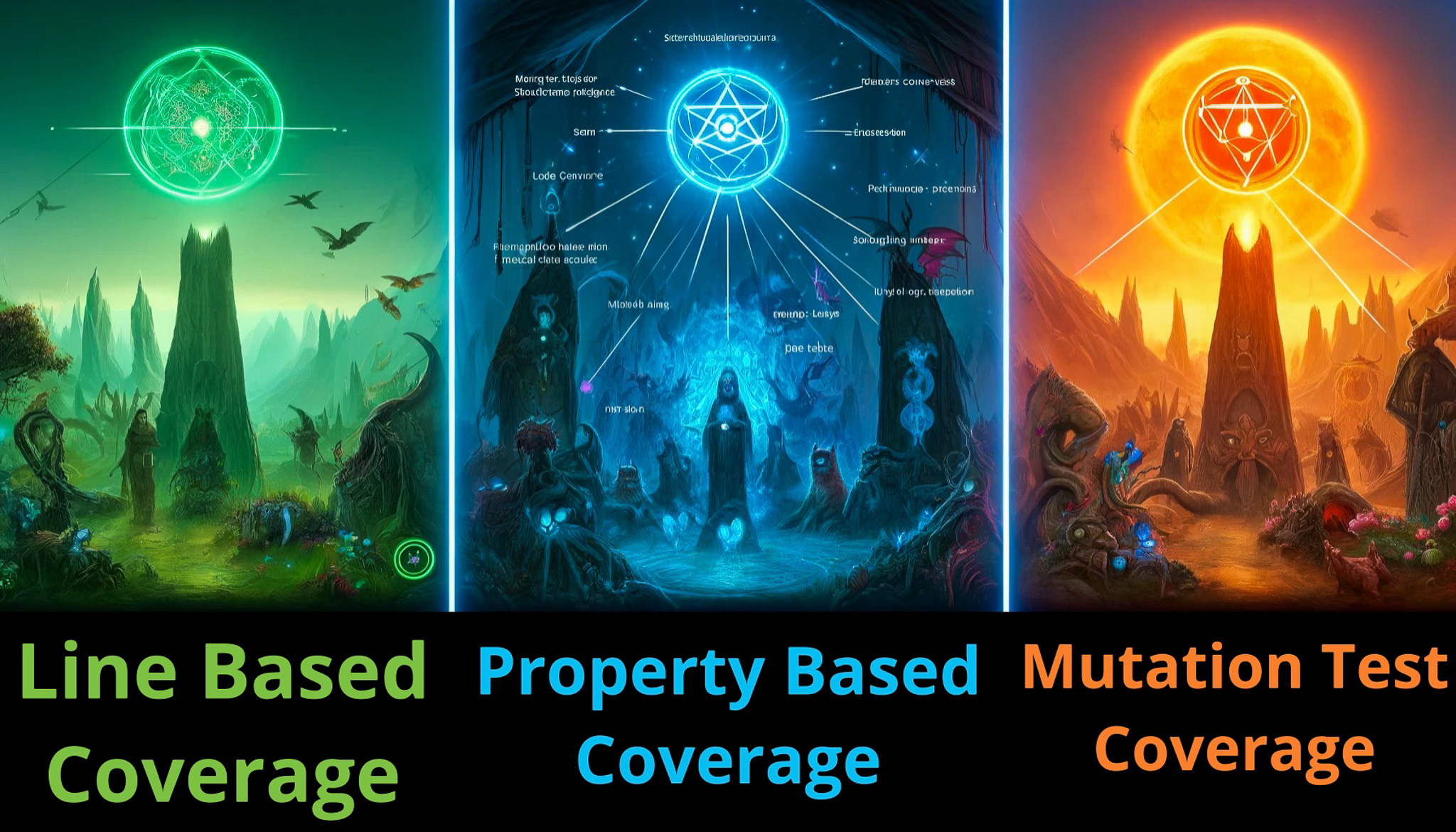
What is Test Coverage? # Test coverage is a metric used in software testing to measure the testing performed on a piece of software. It indicates how thoroughly a software program has been tested by identifying which parts of the code have been executed (covered) during testing and which have not. Here are the key aspects of test coverage:
What is a Package Manager - Bird-Eye View # A package manager is a tool or system in software development designed to simplify the process of installing, updating, configuring, and removing software packages on a computer system. It automates managing dependencies and resolving conflicts between different software components, making it easier for developers to work with various libraries, frameworks, and tools within their projects.