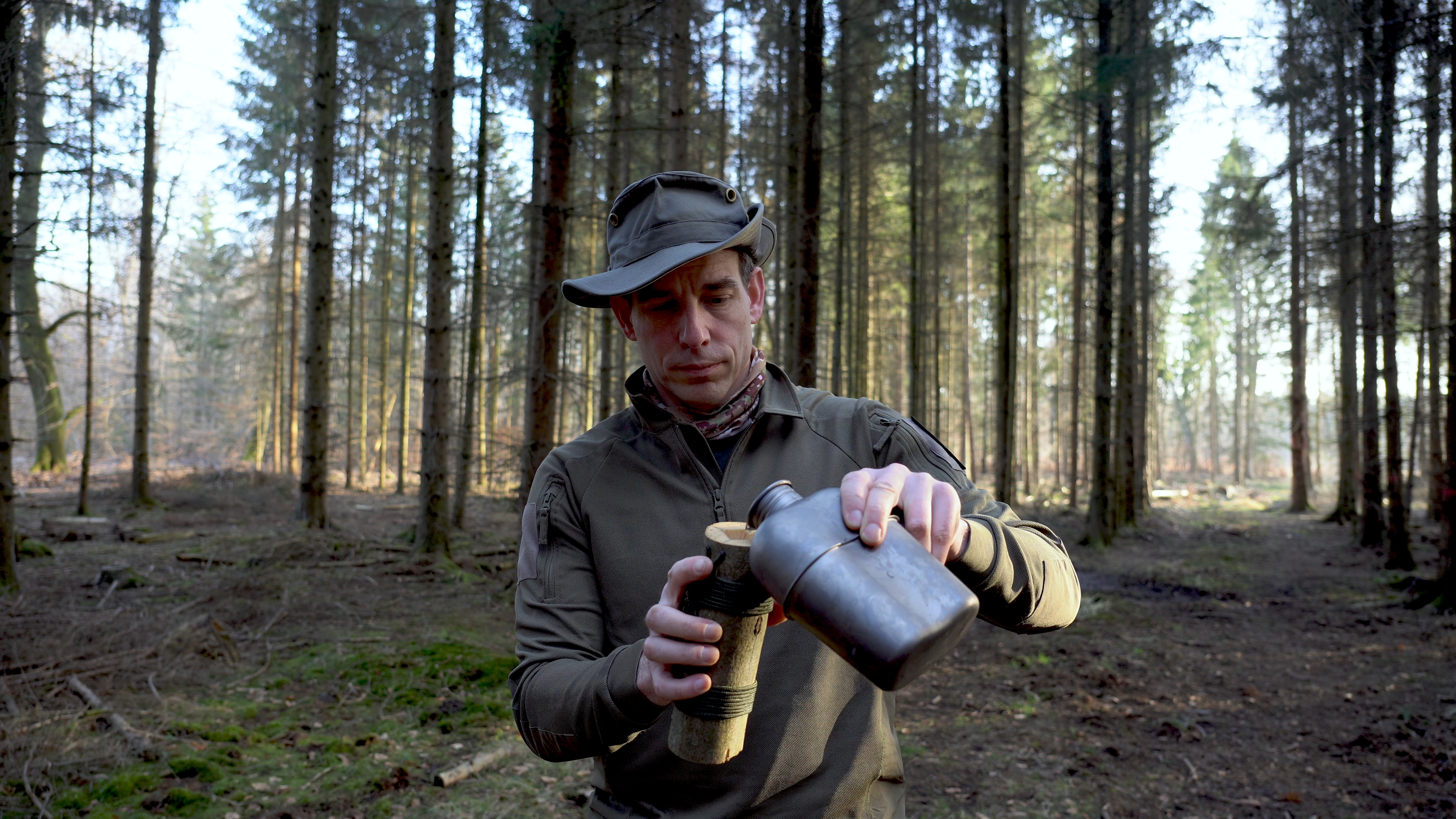

In this episode, I’ll show you how to make a comfortable bushcrafting chair out of a few sticks and a little string.
Step 1 - Finding suitable wood#
For this seat, we need three wooden poles. These must be stable enough to bear the weight of whoever wants to sit on them. When choosing the pieces of wood, you should, as always, make sure that only dead wood is used. In addition to the aspect of not damaging living trees, it also has a convenient background. With fresh wood, you always have to expect that there is still some moisture and resin in the workpiece and leak out in different places over time. In my search, I opted for secluded beech wood. All bars have a diameter of approx. 10cm are dry and sufficiently stable to hold my weight individually. Of course, rotten wood is not advisable.
#
Step 2 - cutting the workpieces
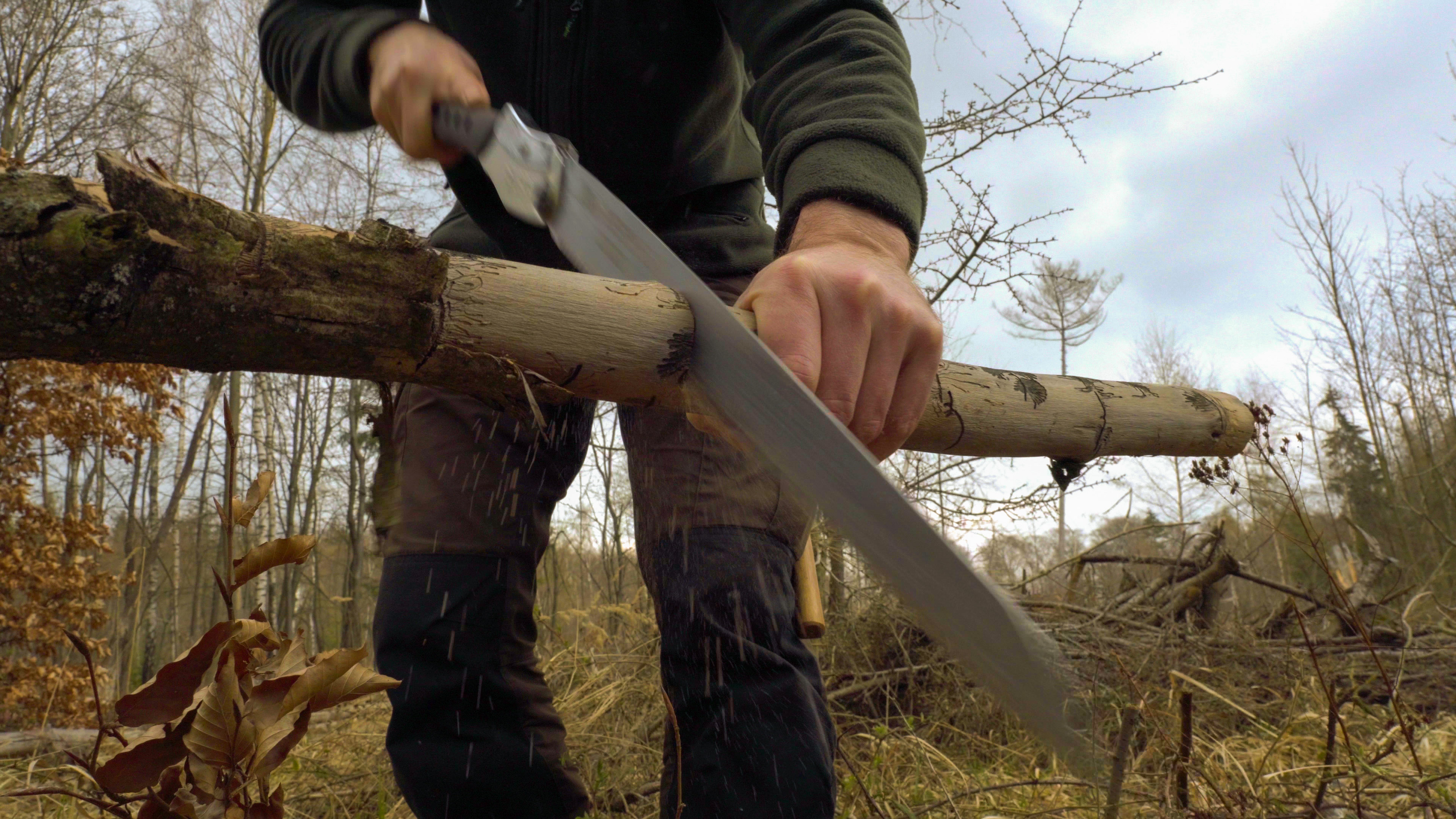
For the two outer poles, two branches with a length of approx. 1.50 m to 1.80 m are required. With these two bars, it doesn’t matter that they are straight. Here you can also use slightly crooked workpieces. A wooden rod with a length of 1m to 1.50m can be used for the seat itself. This bar can be a little thicker so that the later seating comfort is a little more fabulous.
#
Step 3 - smoothing the workpieces
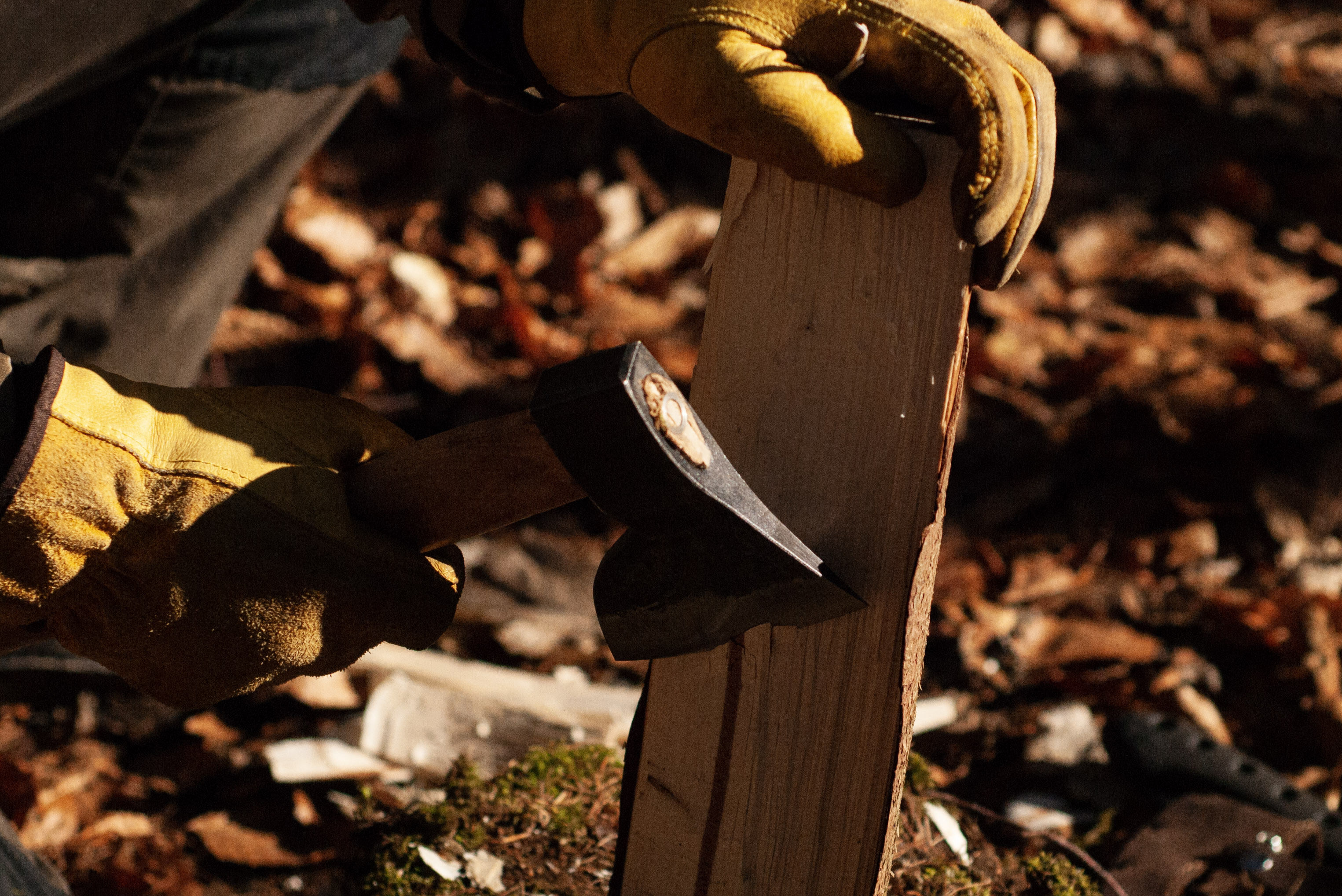
After the branches have all been sawn to the correct length, all protruding branches should be removed. In this step, you can remove the branches with a hatchet and any remaining bark remnants. Removing the bark residues ensures that the pieces of wood used can withstand the weather for longer. Not only does moisture collect under the bark, but also insects will quickly find a new home here. When you have now sawn, debarked and smoothed all three pieces of wood, the assembly begins.
Step 4 - frame construction#
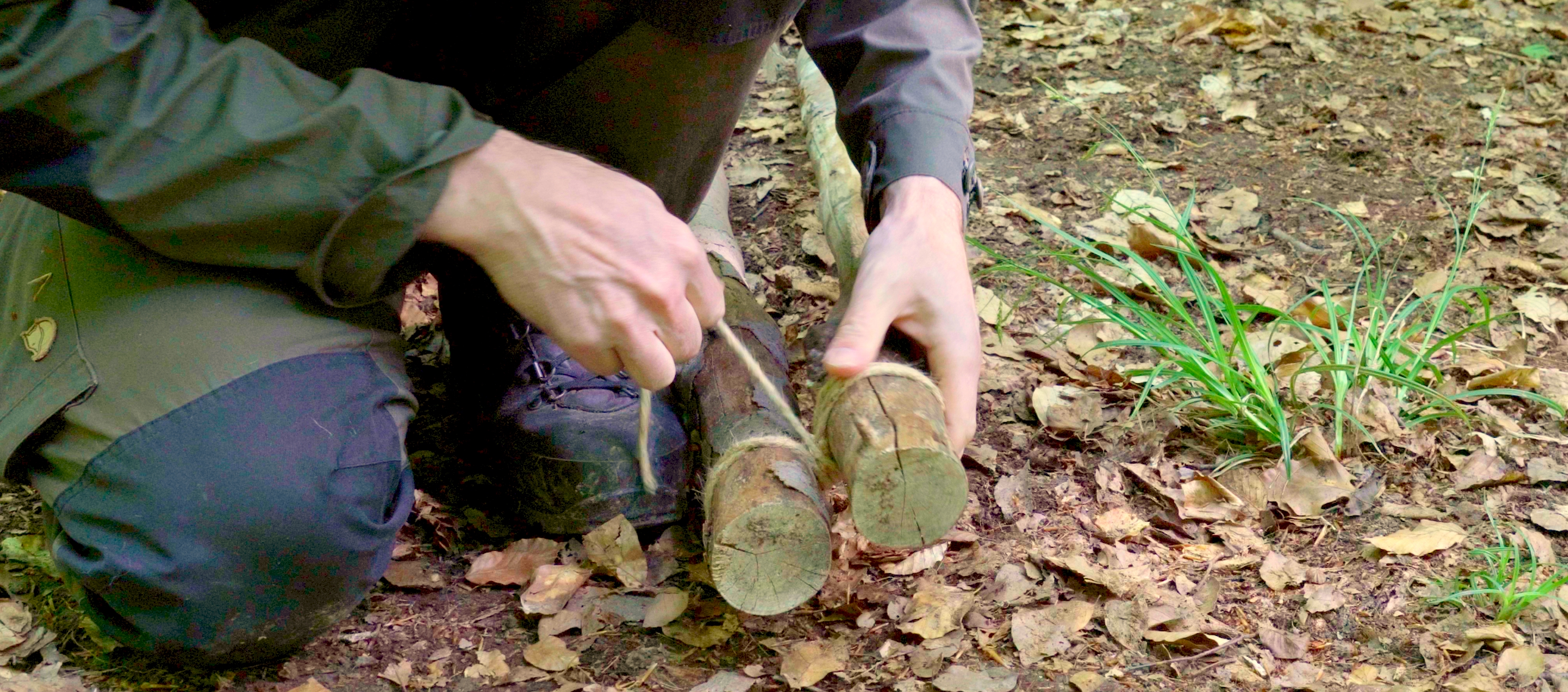
The frame structure itself consists of two long rods. For this purpose, these are tied together on one side, similar to a tripod. For this, I use a rope made from natural products such as hemp. Of course, you can also use paracord. However, I advise against it if you do not want to dismantle this seat immediately after use. If the bushcrafting seat remains in the forest, I ask you not to use plastic-containing cords. The connection itself is kept quite simple and essentially only consists of a few loops and a final knot.
#
Step 5 - the seat
After the two long poles have been connected, this frame should be set up once. On the one hand, you can see whether the newly created connection is holding. On the other hand, you can use the third rod to try out where it should be attached. Once you have decided on a position, you can begin to attach the last piece. To do this, we put the frame construction back on the floor. After the piece has been placed on the two legs of the frame structure, both sides can be connected. It would be best if you made sure that the connections are sufficiently stable and resilient, as this is where the highest loads occur.
#
Step 6 - commissioning
After all, connections have been made; you can set up the construction and try it out right away. The two long poles are leaned against a tree trunk with the upper part. However, the angle to the tree trunk also determines the seat height and stability.
And the bushcraft chair is ready. The entire construction should be set up in about 15 minutes after the workpieces have been found. The short construction time makes this project ideal for a shared adventure with children.
Have fun with the reproduction.