
#
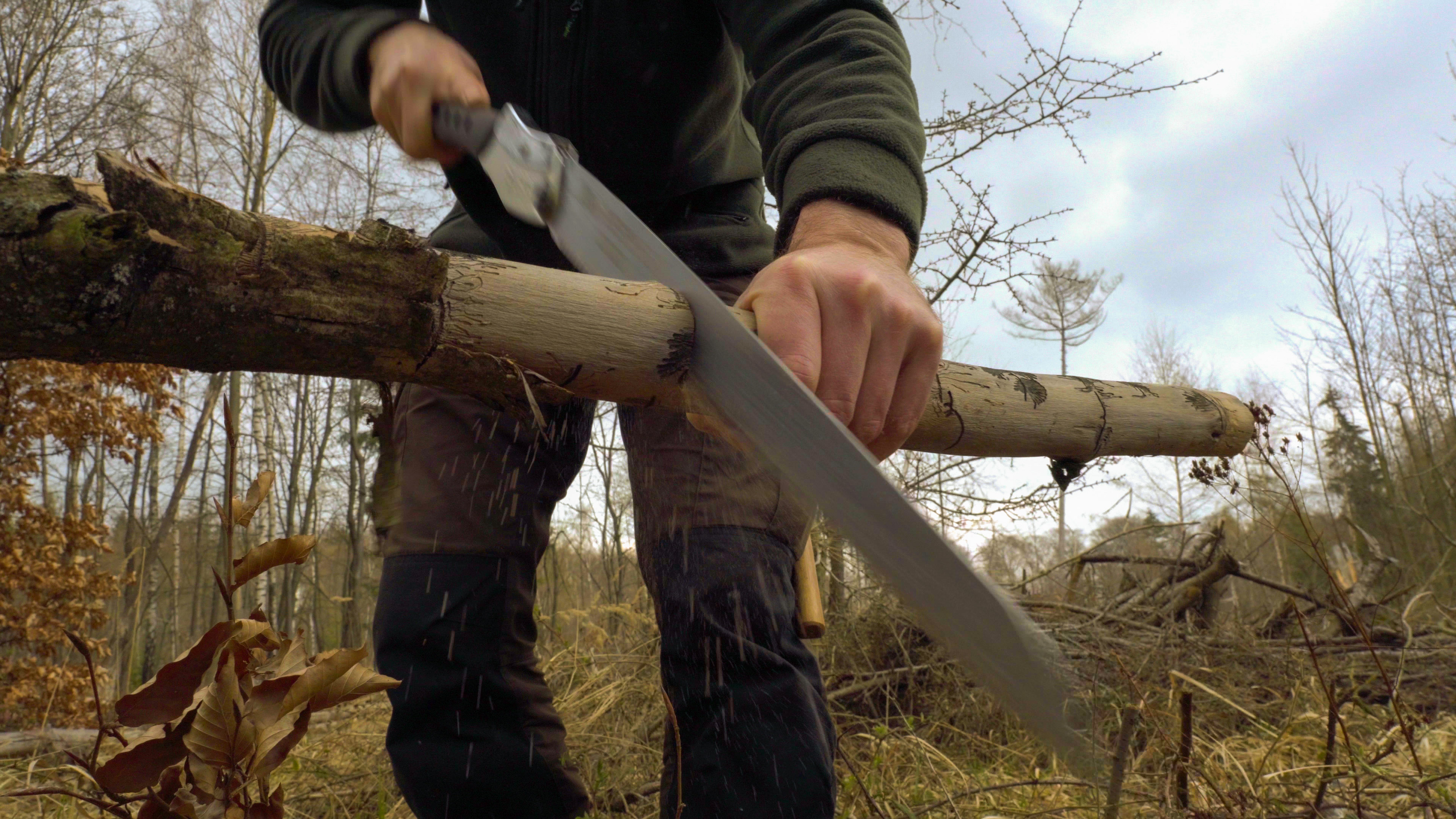
When I’m out in the forest, I always enjoy having some tools with me. The backpack is certainly a little heavier, but there are countless possibilities. My son was there again on one of my last tours. At the time I write this blog post (early 2021), he is ten years old. It’s always lovely to see the enthusiasm with which new things are tried.
We had set ourselves the goal of building a bank. We had an axe, a saw and a paracord with us as tools.
To find a suitable workpiece, forest areas in which there are deciduous trees are suitable. Conifers are usually not very ideal because they contain much resin. Now and then, you will find places where some medium-sized trees such as birch, beech or oak have been fallen due to the last storm, are relocated. Of course, you have to be careful in such places whether the tree trunks are still under tension. We found just such a place, and we immediately started to sift through the wood. Since the logs had fallen for some time, it was safe to move between them.
What should a suitable workpiece look like?#
Trunks that do not entirely rest on the ground are best. These pieces are usually dry and have a firm consistency. If you tap the wood with your fingers, you can hear a bright sound. If the sound is dull or if the wood is a bit musty, it is usually not worth sawing out a piece.
The length can be chosen freely and is only limited by the total weight you can carry yourself. Depending on the length, the trunk section must, of course, have a suitable thickness in diameter. After all, this piece of wood is supposed to withstand the weight of the people sitting on it. The comfort of the seat is, of course, greater the deeper the seat is. If in doubt, choose a larger diameter.
In our case, we have chosen a reasonably short piece of about one meter. The diameter is about 25cm and therefore sufficient for the expected weight.
Sawing the sections#
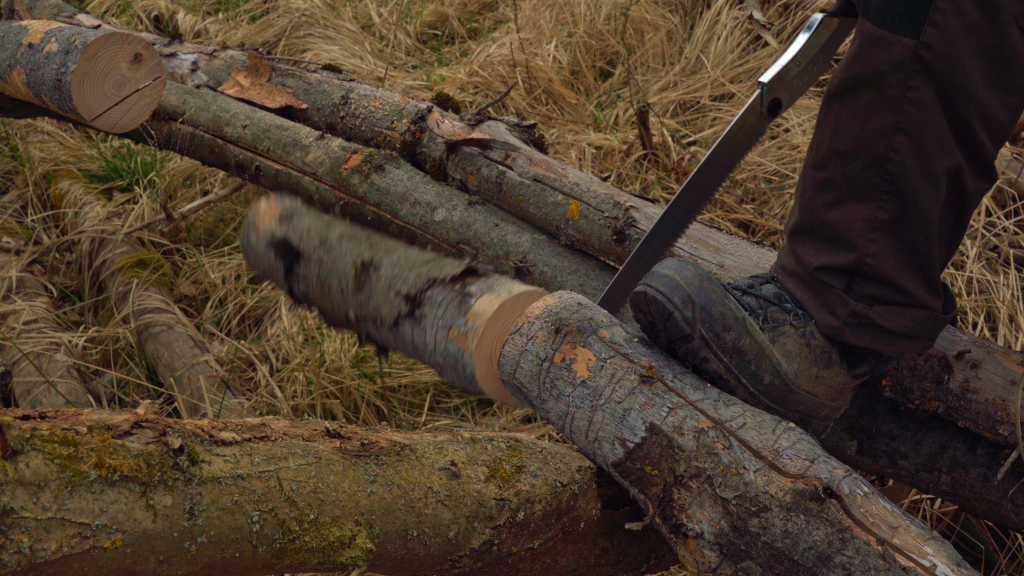
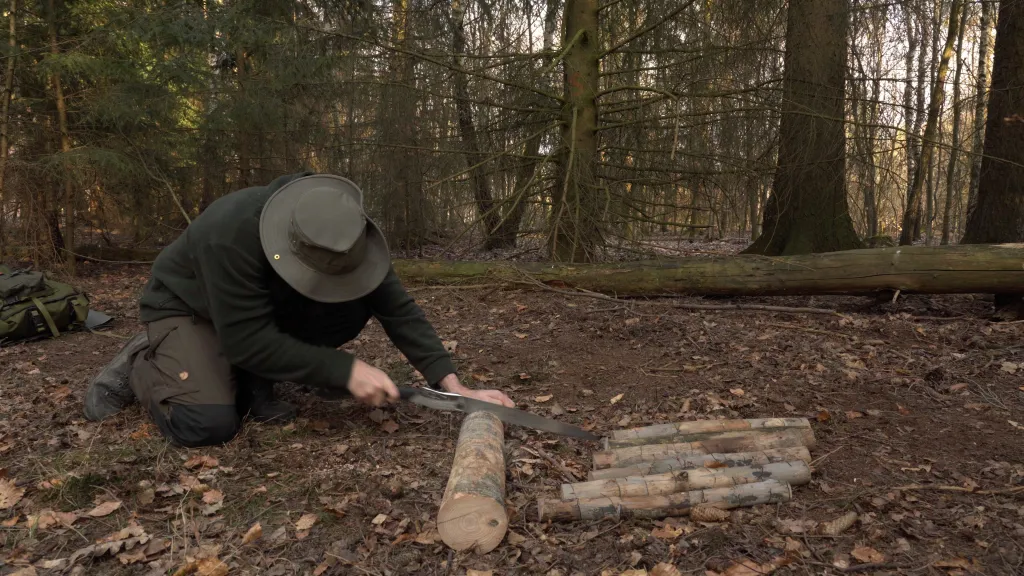
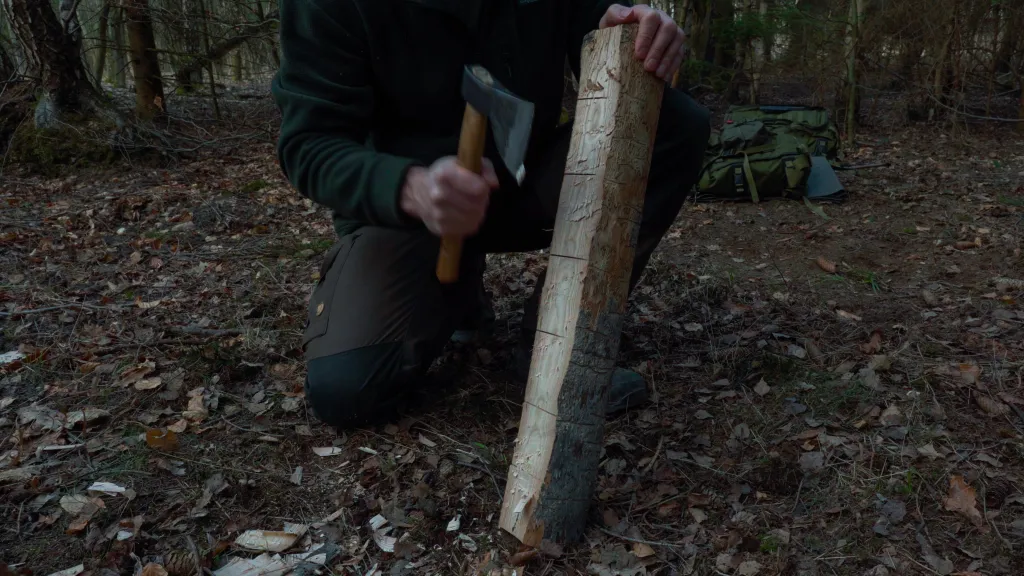
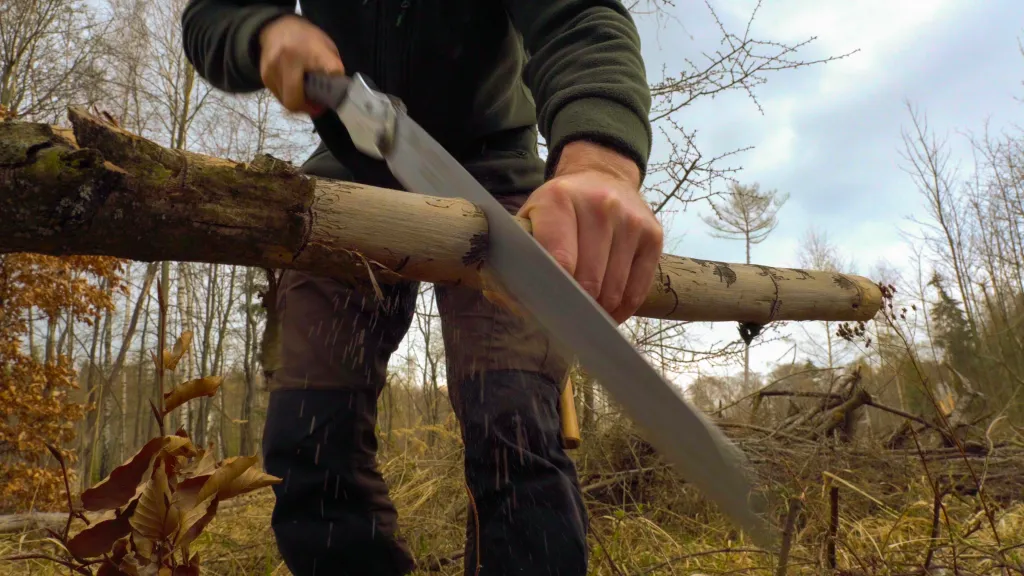
To sit comfortably on the bench, one long side is now removed from the tree trunk piece. The aim is to get a flat surface over the entire width of the beam. So that the stability does not suffer too much, it is advisable not to split the trunk directly in the middle. It is possible to saw off a piece over the entire length, but it is quite a laborious task. I prefer to saw across the workpiece with a saw at intervals of about a hand’s breadth. The cut should be so deep that it corresponds to the portion to be removed.
Manufacture the seat#
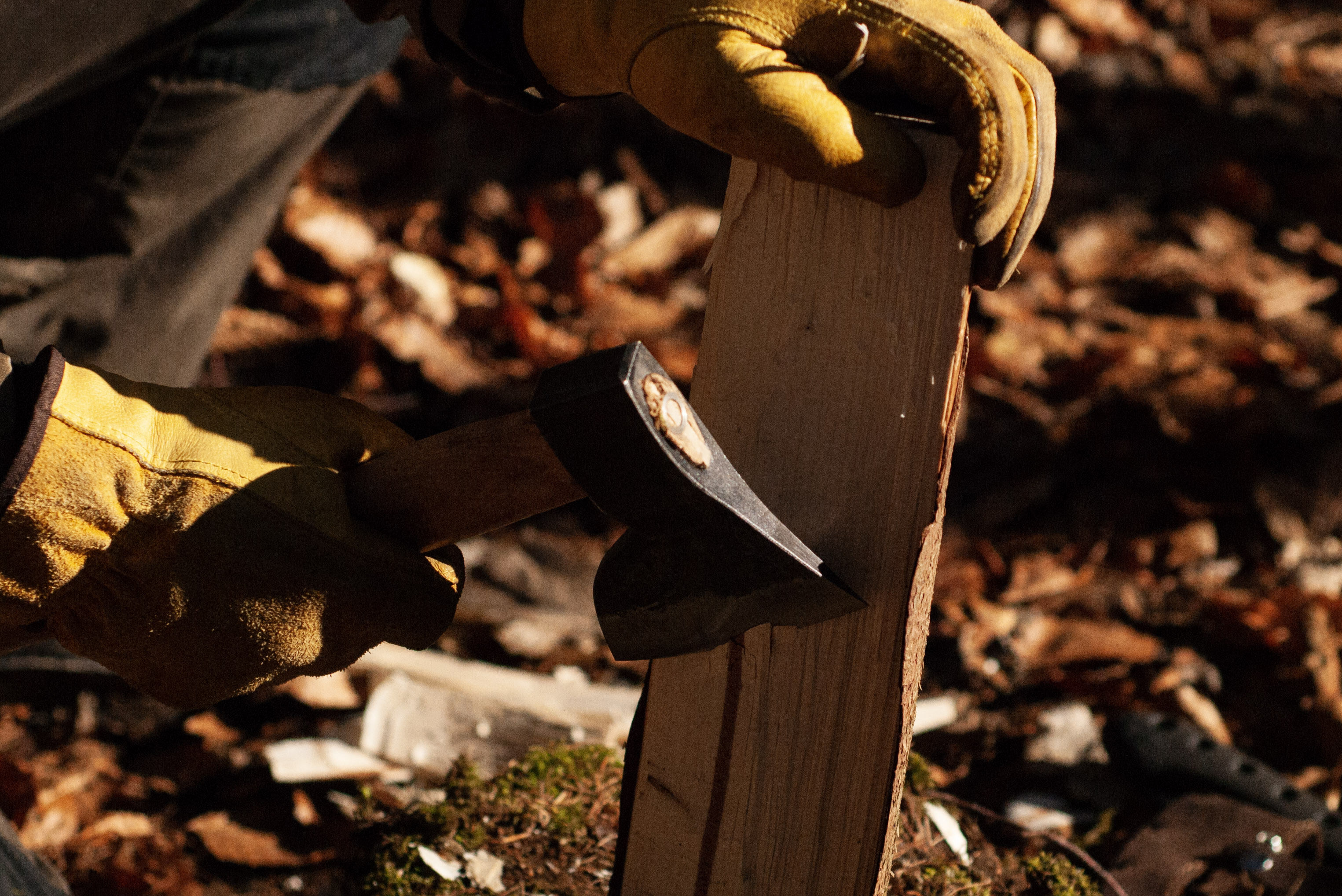
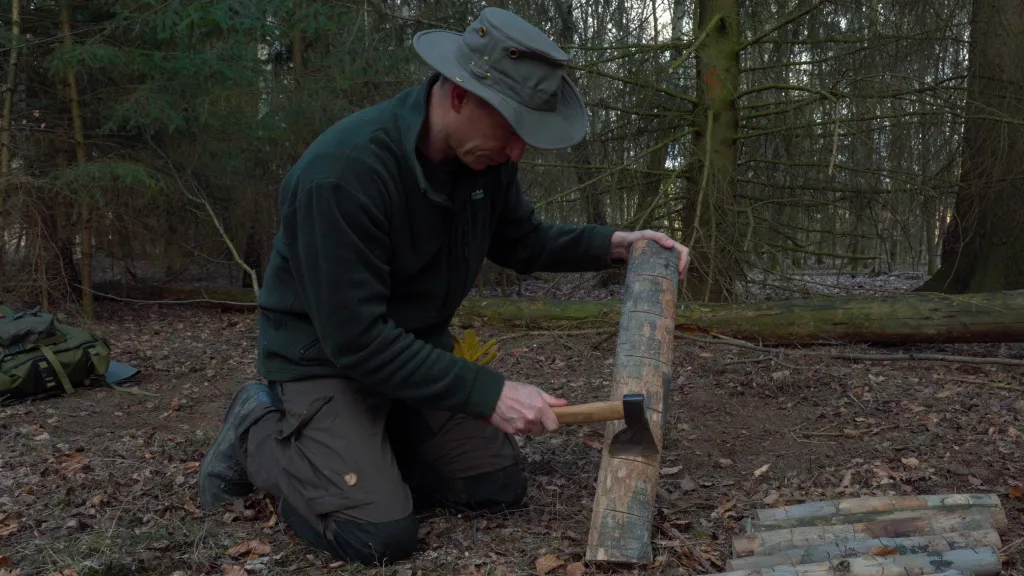
When the trunk has now been sawed, the tree trunk’s unneeded part can be removed with the axe. It is best to start with a middle segment. I hold the workpiece upright with my left hand and then use the axe with my right hand. By sawing, the pieces come off quite easily. When all segments have now been removed with the axe, the fine work can begin. With the axe or knife, you can now work on the seat as finely as you would like to do it.
Find and saw wood for tripods#
The main piece is now finished. Now the pieces of wood are missing with which you can make the two tripods you need. Six sticks of the same length, if possible, with a diameter of about 4 cm or a little more are needed. Of course, you have to take the total weight into account here too.
In our case, sticks a little more than 40cm long and about 4cm in diameter were sufficient. Again, dry and stable dead wood from deciduous trees should be used.
Tie a tripod#
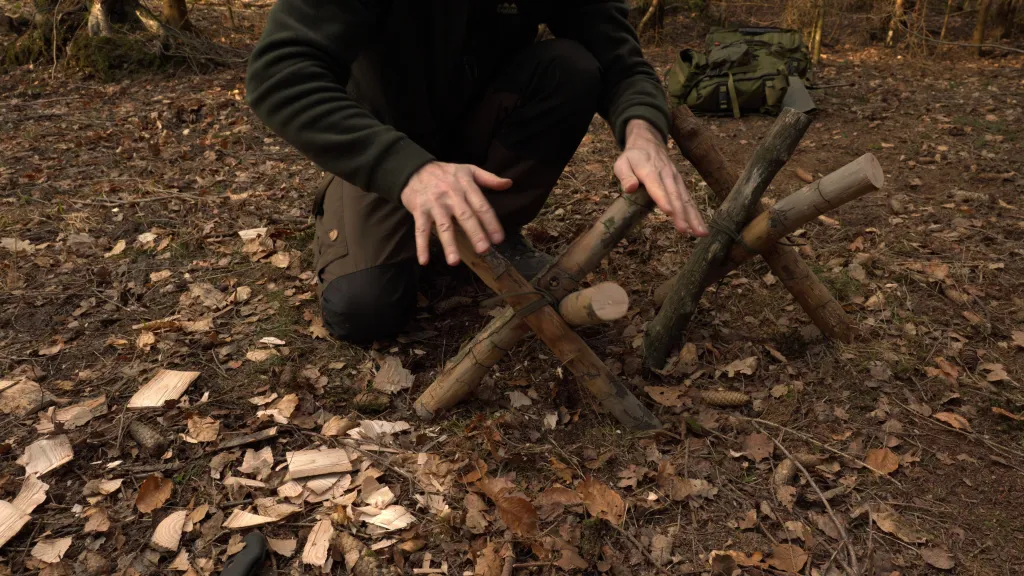
To tie a tripod out of three sticks, you need a little bit of Paracord. A 2m long piece of string should be sufficient. I am placing the three sticks next to each other so that there is no space between them. The cord is attached to one of the outer sticks in the middle and then wrapped around all sticks. It would be best if you made sure that the bars stay tightly together. Towards the end, you can wrap the end piece between the sticks a few more times. The end of the Paracord should then be knotted tightly. The tripod is now ready and can be set up.
Assemble the bench#
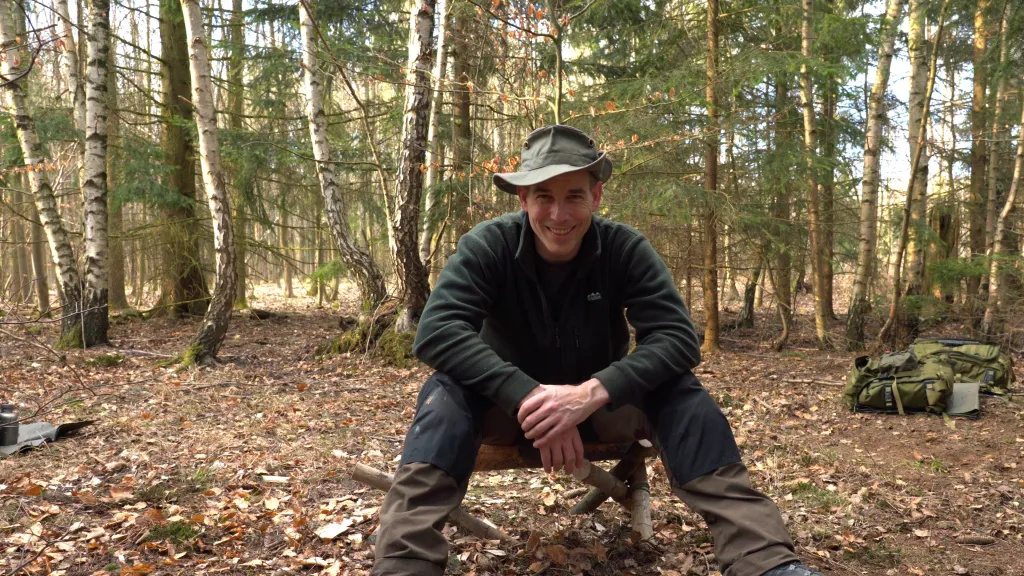
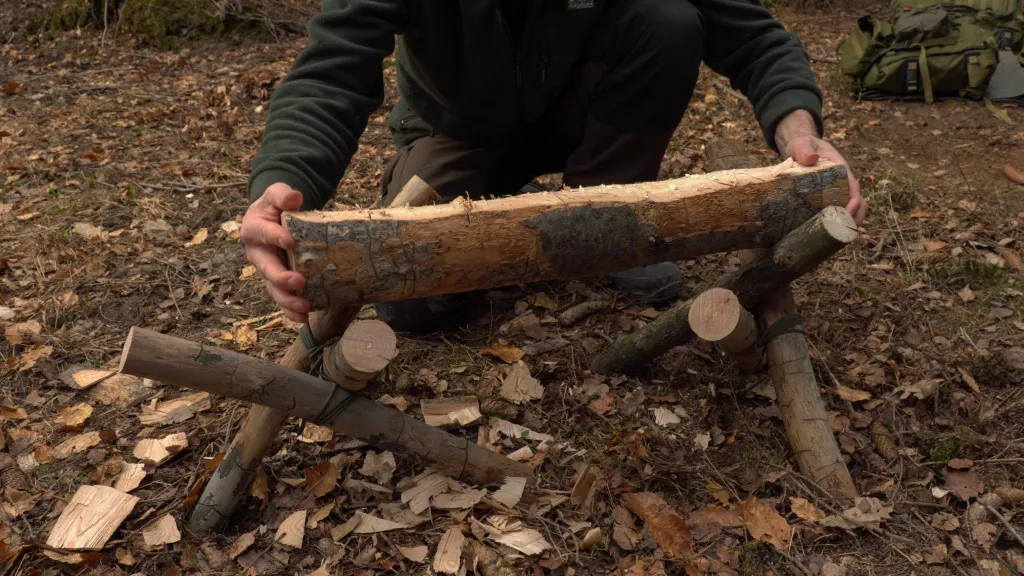
Time for the last work step now. Take the first workpiece and place it on the two tripods. After a slight fine adjustment, the bench should be ready.
Installation#
The high point is to try out the bank and see if everything will hold up. All work steps can be carried out in about 30 minutes and are ideally suited as a small leisure project. Besides, there is, of course, the time to find suitable wood is not included.