Password security is an often underestimated but critical topic in software development. Databases containing millions of user logins are repeatedly compromised - and shockingly, often, it turns out that passwords have been stored in plain text. This gives attackers direct access to sensitive account data and opens the door to identity theft, account takeovers and other attacks.
A deep look into Java’s HashMap traps – visually demonstrated with Vaadin Flow.
The silent danger in the standard library # The use of HashMap and HashSet is a common practice in everyday Java development. These data structures offer excellent performance for lookup and insert operations, as long as their fundamental assumptions are met. One of them is hashCode() of a key remains stable. But what if that’s not the case?
Vaadin Flow is a robust framework for building modern web applications in Java, where all UI logic is implemented on the server side. In this blog post, we’ll make a simple file management application step by step that allows users to upload files, save them to the server, and download them again when needed. This is a great way to demonstrate how to build protection against CWE-22, CWE-377, and CWE-778 step by step.
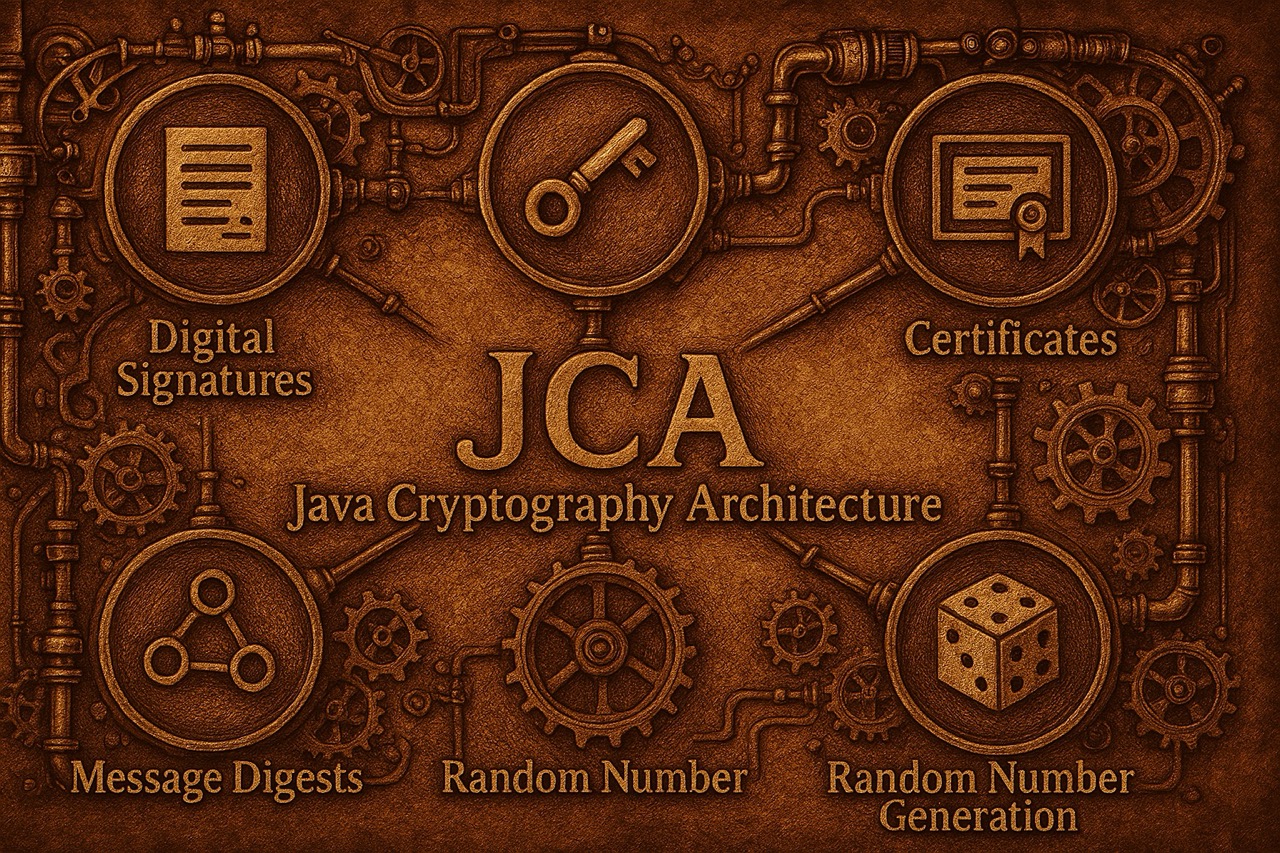
The Java Cryptography Architecture (JCA) is an essential framework within the Java platform that provides developers with a flexible and extensible interface for cryptographic operations. It is a central component of the Java Security API and enables platform-independent implementation of security-critical functions.
Cache poisoning on Maven Caches is a specific attack that targets how Maven Caches manages packages and dependencies in a software development process. It’s essential to understand how Maven works before we look at the details of cache poisoning.
The world of cybersecurity is full of threats, many of which are surprisingly subtle and challenging to detect. One such threat is the problem of so-called homoglyphs. CWE-1007, also known as “Insufficient Visual Distinction of Homoglyphs Presented to User”, is a vulnerability often used by attackers to deceive and compromise your systems or data. In this blog article, you will get a deep insight into CWE-1007, understand its mechanisms, and how to protect yourself from such attacks. We will discuss examples, technical challenges, and best practices that can help you as a developer understand and mitigate this threat.
Learn how inadequate control over error reporting leads to security vulnerabilities and how to prevent them in Java applications. # Safely handling error reports is a central aspect of software development, especially in safety-critical applications. CWE-778 describes a vulnerability caused by inadequate control over error reports. This post will analyse the risks associated with CWE-778 and show how developers can implement safe error-handling practices to avoid such vulnerabilities in Java programs.
Unit testing is an essential software development concept that improves code quality by ensuring that individual units or components of a software function correctly. Unit testing is crucial in Java, one of the most commonly used programming languages. This article will discuss what unit testing is, how it has evolved, and what tools and best practices have been established over the years.
Building on the discussion of “CWE-377: Insecure Temporary File”, it’s essential to delve deeper into one of the most insidious vulnerabilities that can arise in this context—TOCTOU (Time-of-Check to Time-of-Use) race conditions. TOCTOU vulnerabilities occur when there is a time gap between verifying a resource (such as a file) and its subsequent use. Malicious actors can exploit this gap, especially in temporary file scenarios, leading to serious security breaches. This follow-up article will explore how TOCTOU conditions manifest in software, particularly in managing temporary files, and discuss strategies to mitigate these risks to ensure robust and secure application development.
Self-modifying code refers to a type of code that alters its own instructions while it is executing. While this practice can offer certain advantages, such as optimisation and adaptability, it is generally discouraged due to the significant risks and challenges it introduces. For Java developers, using self-modifying code is particularly problematic because it undermines the codebase’s predictability, readability, and maintainability, and Java as a language does not natively support self-modification of its code.
In software development, temporary files are often used to store data temporarily during an application’s execution. These files may contain sensitive information or be used to hold data that must be processed or passed between different parts of a program. However, if these temporary files are not managed securely, they can introduce vulnerabilities that may compromise the application’s confidentiality, integrity, or availability. The Common Weakness Enumeration (CWE) identified CWE-377 as a weakness associated with the insecure creation and management of temporary files.
In today’s digital landscape, ensuring the security of your applications is paramount. One critical vulnerability developers must guard against is CWE-22, Path Traversal. This vulnerability can allow attackers to access files and directories outside the intended scope, potentially leading to unauthorised access and data breaches.